
G935 accessory and packaging review
The G935 image set supports discussion of the detachable microphone, receiver, cable, guide and packaging contents before sample approval.

Sample approval checklist
The sample looks good. Music plays. Is it ready to approve? Not yet. Try speaking through the microphone while game audio is playing, reconnect after turning the headset off, and check what is actually in the box. These are different checks from liking the first impression.
Start with the exact sample version and the devices your customers use. Use the blank review sheet below to record what worked, what failed and what you have not tested.

Editable buyer worksheet
Download the blank English text worksheet without submitting an email address. It covers playback and microphone use together, mode switching, USB cable purpose, controls, fit, battery conditions, accessories, documents and unresolved changes.
This is a proposed buyer review, not a completed test report. Agree acceptance criteria first; repeat connection checks for each required device and mode. Leave untested items marked "Not tested" rather than treating missing evidence as a pass.
The G938 video shows a physical sample and controls; it does not prove completed Bluetooth pairing or compatibility with every phone. For a setup question, send the sample ID, device and connection mode. Share recordings or photos by email or WhatsApp, without unrelated personal information.
Short answer
Keep the approved sample as a reference, but do not rely on appearance alone. Write down the version, required functions, agreed accessories and any changes still needed. A sample review helps define what to check in production; it does not prove that every bulk unit will match.
Quick checklist
This table turns a product sample into a repeatable buying decision. The goal is to confirm what can actually be checked before a bulk order.
| Review Area | What to Check | Why It Matters |
|---|---|---|
| Model identity | Model number, color, connection version and included accessories | Prevents confusion between similar headset versions |
| Appearance | Finish, earcup shape, headband, logo area and visible assembly | Helps confirm whether the product fits the target channel |
| Wearing fit | Earcup coverage, headband pressure, cushion feel and weight | Affects comfort and buyer evaluation |
| Microphone | Boom structure, detachable plug, position and mute/control layout | Important for gaming communication and product review |
| Connection | 2.4GHz USB receiver, Bluetooth or wired setup, cable set and pairing flow | Confirms the actual user setup before packaging decisions |
| Controls | Buttons, volume wheel, ports, indicator lights and charging port | Reduces user confusion and support questions |
| Accessories | Receiver, cable, microphone, windscreen, manual and packaging contents | Helps prepare the final packing list |
| Packaging | Box structure, product image, manual language and accessory layout | Connects product approval with retail or distribution needs |
Product image references
Images do not replace a physical sample, but they help buyers identify the exact parts to check: microphone connection, receiver set, packaging contents, wearing fit and control layout.
The G935 image set supports discussion of the detachable microphone, receiver, cable, guide and packaging contents before sample approval.
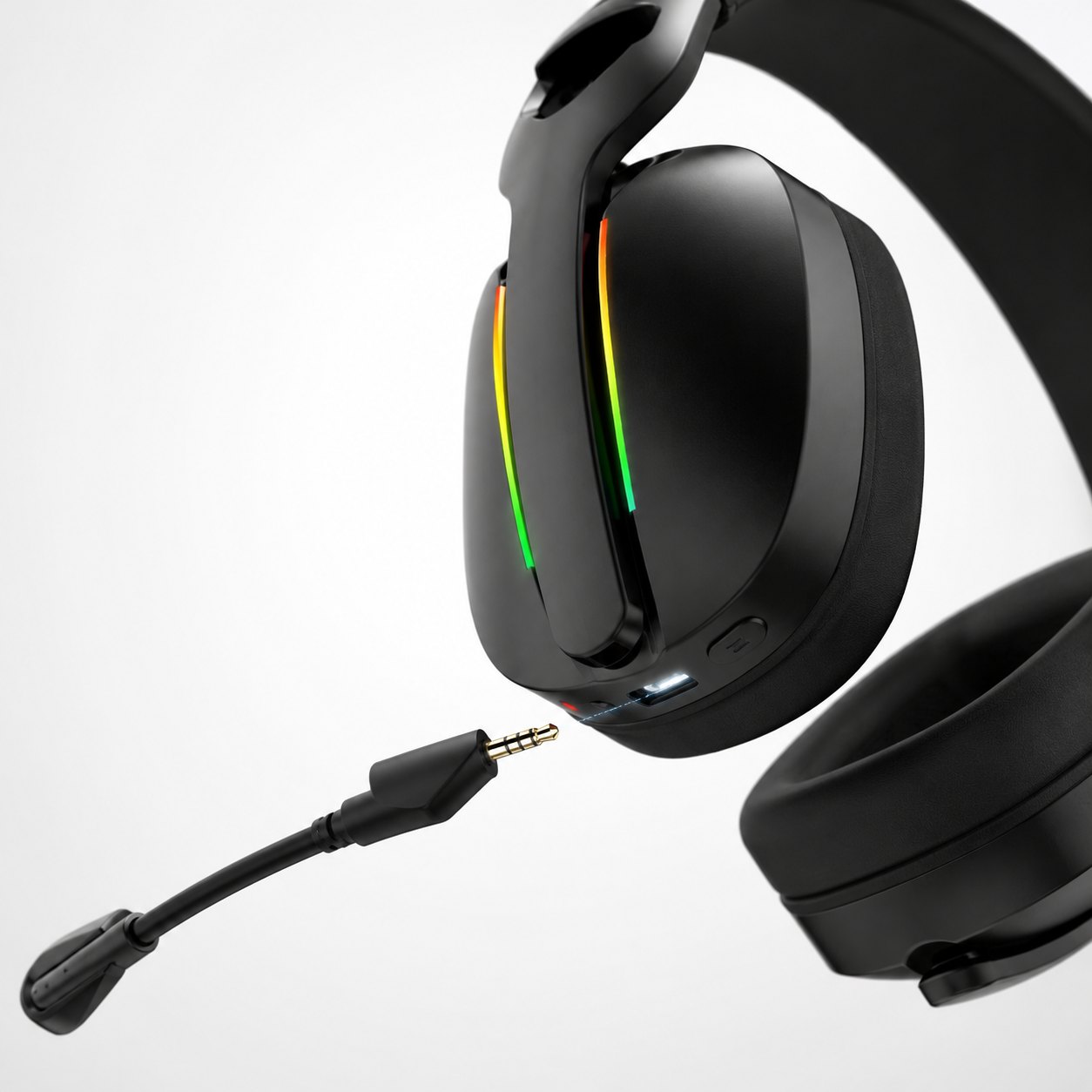
Close-up microphone images help buyers review plug structure, boom direction, connection point and handling questions.
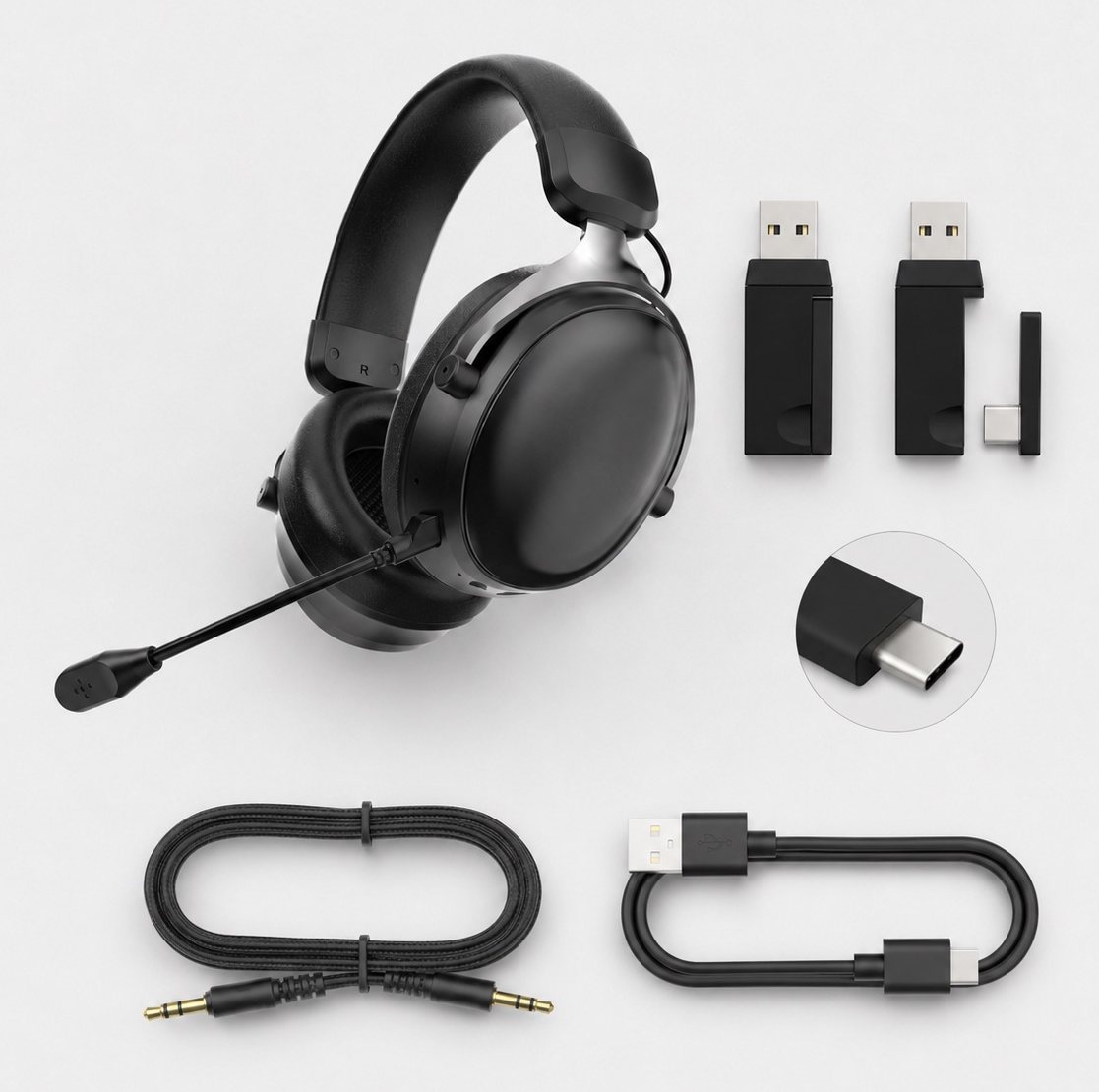
For wireless gaming headset samples, confirm the actual receiver, cable and accessory set tied to the selected sample version.

Use-scene images help connect the model to PC, console or mobile-adjacent sample questions without adding unsupported claims.
Step 1
The first step is to confirm which sample version is being reviewed. Many wireless gaming headset models may have similar names but different connection options, accessories, battery versions, receiver types or packaging directions.
Step 2
A sample should be checked visually before functional testing. This includes the finish, earcup shape, headband structure, adjustment parts, microphone connection and visible assembly details.
A cleaner design may fit private-label lifestyle gaming ranges, while a stronger contrast-color direction may fit gaming accessory retail.
Review the earcup and packaging areas before discussing logo placement or custom artwork.
Check headband, earcup joint, microphone port, buttons, cable strain relief and overall finish consistency.
The best product direction depends on the destination market, sales channel, brand position and sample feedback.
Step 3
Product photos are useful for shortlisting, but fit and connection behavior must be checked on the physical sample.
Review headband pressure, earcup size, cushion softness, weight balance, adjustment range and microphone position when worn.
Check whether the boom is detachable or fixed, whether the plug feels stable, and whether mute or microphone controls are easy to understand.
Review the 2.4G receiver shape, Bluetooth or wired direction if applicable, pairing flow, cable set and indicator lights.
If the headset may be used for long sessions, test pressure, heat and microphone placement after more than a short first impression.
Step 4
Packaging should be discussed after the product version is clear. At the sample stage, buyers should confirm what needs to be included and what should remain optional.
Model comparison
A single sample may look acceptable, but buyers often make better decisions by comparing two or three model directions. The comparison should include both specifications and physical review.
G935 fits reviews that need a clean 2.4G wireless headset direction with detachable microphone, accessory set and packaging reference images.
G938 fits reviews that need tri-mode use, a 53mm driver direction, accessory images, product film and sample discussion.
G941 fits reviews that need tri-mode use, receiver detail, color directions and official product or microphone video references.
The product comparison page compares G935, G938, G940 and G941 before buyers select a model shortlist for samples.
Sample request
Share the target market, sales channel and whether the product is for distribution, retail, e-commerce or private-label review.
Name the preferred model or ask for a focused shortlist if the final direction is not clear yet.
Provide the estimated quantity range and required sample timing so the discussion stays practical.
State whether the first sample can use the standard version, then list later logo, packaging, manual language or document needs.
Next checks
After the physical sample is reviewed, connect the result to the specialist checklist that matches the open question.
The microphone page is useful when voice chat, boom position, keyboard noise, fan noise or wireless call stability needs deeper review.
Confirm receiver, cable, detachable microphone, manual, box contents and optional items against the selected sample.
Connect the approved sample version to destination-market labels, packaging language and document questions.
Prepare market, channel, model code, sample feedback, quantity range, branding, packaging and unresolved questions.
The manufacturer guide helps when the sample result is part of a wider supplier comparison.
Send TALRIVO the product category, model interest, destination market, channel and sample timing.
FAQ
Start by confirming the exact model version, color, connection direction, 2.4GHz USB receiver or cable set, microphone type and included accessories. This prevents confusion before appearance, comfort and function testing.
No. Packaging should be discussed after the base sample version is confirmed. The approved product determines the logo area, accessory list, manual language and packing structure.
No. Driver size is only one specification. Buyers should also check wearing comfort, microphone structure, wireless setup, controls, accessories, packaging and the intended sales channel.
Yes. Buyers can compare models such as G926, G935, G938, G940, G941 and G936 by product direction, supplied images, specifications, microphone structure and sample needs before selecting a shortlist.
Record the model code, sample date, connection behavior, microphone notes, comfort feedback, accessory list, packaging questions, requested revisions and RFQ follow-up points.
Share your target market, sales channel and model shortlist. TALRIVO can help review the right wireless gaming headset sample direction before bulk order discussion.